
Competition across the athletic apparel industry is intensifying. Established rivals and fast-growing activewear brands have gained momentum by responding more quickly to shifting consumer preferences, putting pressure on longtime market leaders to modernize their product offerings, shopping experiences, and operations.
The pressure has led several retailers to reevaluate their physical footprints. Nike, the world’s largest sportswear company, shuttered roughly a dozen stores in July 2026 as part of an ongoing effort to streamline its retail footprint and focus on higher-performing locations, while Dick’s Sporting Goods has closed more than 175 Champs Sports brand stores.
Now, another footwear company is taking similar steps to improve retail profitability.
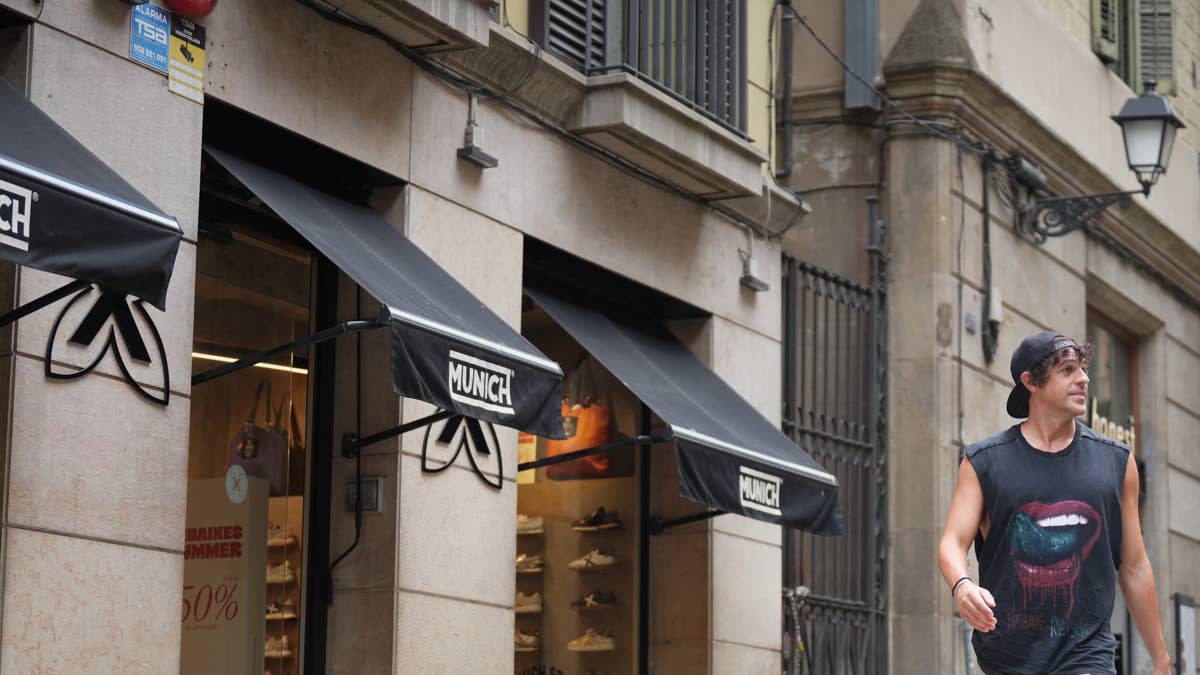
Founded in 1939, Munich is a Spanish-based footwear and sportswear brand recognized for its distinctive “X” logo featured on the side of its shoes. While the company has expanded into more than 30 international markets, Spain remains its largest business.
Munich to close 15 stores
Munich is closing 15 stores, resulting in the layoffs of 65 employees as part of a collective redundancy plan.
A collective redundancy procedure (ERE) is Spain’s legal process for conducting mass layoffs due to business or economic reasons rather than individual employee performance. It is broadly comparable to the notification and consultation requirements established under the U.S. WARN Act, although the two systems operate under different labor laws.
Munich operates more than 40 points of sale across its own stores and locations within the Spanish department store chain El Corte Inglés. The company plans to shutter underperforming locations while reportedly proposing to pay legally required severance compensation in installments.
The closures are concentrated in Spain, where the affected stores are located in Barcelona, Madrid, Seville, Málaga, Zaragoza, and San Sebastián.
Why Munich is closing stores
Munich says the decision reflects declining revenue at underperforming stores and continued losses across its retail network.
According to the company, it first explored alternatives to avoid the closures, including renegotiating lease agreements with landlords before initiating the ERE process. Munich also said each store will be handled individually because lease agreements and contractual obligations differ by location.
In an interview with Palco23 last year, Munich CEO Xavier Berneda said improving operational efficiency remained a top priority as the company worked to consolidate recent growth while investing in logistics and long-term profitability.
Berneda also pointed to broader macroeconomic pressures, including international conflicts that have complicated inventory management and left the company holding merchandise that has been difficult to sell.
“We need to be growing at a steady pace,” said Berneda.
Although Munich already operates in more than 30 international markets, the company continues to identify the U.S. as one of its biggest long-term growth opportunities, even though the market currently represents only a small share of annual revenue.
Sales outside Spain account for between 15% and 20% of the company’s overall business.
Munich generated €81 million in revenue in 2023, a 9% increase from the previous year, according to La Vanguardia. Despite the top-line growth, the current restructuring highlights the company’s effort to improve the profitability of its retail operations rather than simply expand its store count.
Europa Press News / Getty Images
Employees push back against restructuring
Workers affected by the layoffs allege Munich is attempting to accelerate the ERE process. The consultation period is scheduled to conclude in mid-August, and the employee representatives have reportedly objected to the company’s proposal to distribute legally required severance payments over multiple installments.
The workforce reduction affects La Tormenta Perfecta, the company that operates Munich’s retail store network and employs its store associates.
The shift toward e-commerce continues reshaping retail
Munich’s restructuring reflects a broader trend playing out across the retail industry as companies seek the right balance between maintaining physical stores and investing in digital growth.
As consumers continue to shift a larger share of their spending online, retailers are reassessing how many brick-and-mortar locations they need while refining omnichannel strategies that combine digital convenience with in-store experiences.
Global e-commerce revenue surpassed $6 trillion in 2024 and is projected to reach $10 trillion by 2033, according to Capital One Shopping.
Despite that rapid growth, physical stores remain the dominant retail channel. Online purchases accounted for approximately 19.9% of global retail sales in 2024, meaning the vast majority of consumer spending still occurred in stores.
Here’s some of my previous coverage of store closures:
- 88-year-old retailer closing 75 stores, slows expansion
- Iconic luxury brand confirms more store closures through 2027
- Former retail giant closes more stores
For retailers, the challenge is no longer choosing between digital and physical channels but determining how each store contributes to long-term profitability, customer engagement, and fulfillment capabilities.
For Munich, the closures represent an effort to reduce losses in its retail network while redirecting resources toward higher-performing locations, operational efficiency, and future international expansion.
“The closing of stores means business expenses can be re-allocated and capital can be invested into more profitable strategies that can help breathe new life into a business,” said Wealth & Finance International industry analysts.
“This may not only be in the form of investing into the ever-growing e-commerce market, but also investing in portfolio and strategy optimization by focusing efforts on high-performing locations.”