
Insider Brief
- Kawasaki Heavy Industries has developed Home LEO, a prototype quadruped social robot that uses physical AI to assist older adults at home, with a commercial launch targeted for fiscal 2028.
- Home LEO is being designed to provide companionship, monitor for problems such as falls or fire risks, assist with daily tasks and share authorized care information with medical and nursing providers.
- Kawasaki plans demonstration trials with Japanese government agencies, healthcare organizations and AI companies as it expands its healthcare robotics portfolio from hospitals and care facilities into the home.
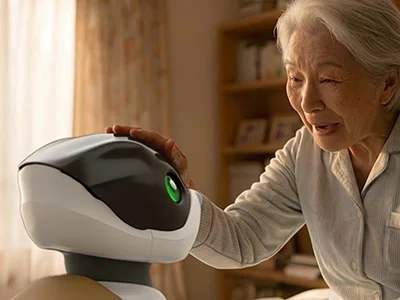
Kawasaki Heavy Industries has developed a prototype social robot designed to help older adults live independently at home, with a commercial launch targeted for fiscal 2028.
According to Kawasaki, the quadruped robot, called Home LEO, that through physical AI can recognize people and its surroundings, make decisions and carry out tasks without constant human control. The company said it is designed to provide companionship, monitor users for potential problems and assist with everyday activities.
Kawasaki indicated it plans to conduct demonstration trials with Japan’s Ministry of Health, Labour and Welfare, Ministry of Economy, Trade and Industry, local governments, medical and nursing-care organizations and AI technology companies ahead of the planned launch.
Home LEO is designed to learn about individual users over time through conversations and daily interactions. Kawasaki said the robot can collect information about a person’s routines and preferences and use that information to tailor its assistance. The system is also being developed to share selected care information with medical institutions and nursing-care providers, with user consent and appropriate information controls. Kawasaki said the goal is to better connect care delivered at home with hospitals and nursing facilities.
What a Future LEO Will Do
The company highlighted four main areas of development:
- Communication tailored to individual users based on conversations, routines and preferences.
- Home monitoring that can identify events including falls, changes in physical condition, unattended fire risks and visitors at the door, while alerting users, family members or care professionals.
- Autonomous assistance with tasks such as moving around the home and finding and handing objects to users.
- A healthcare platform for securely recording information including conversations, routines and general wellness data and sharing it with care providers when authorized.
Kawasaki is developing Home LEO as Japan faces an aging population, regional gaps in medical and nursing care and shortages of healthcare and care workers. The company said extending the amount of time older adults can safely remain in their homes could reduce demands on institutional care while supporting their independence.
Home LEO would expand Kawasaki’s existing healthcare robotics portfolio beyond hospitals and nursing facilities and into private homes. The company’s other healthcare products include the Medicaroid Corporation’s hinotori surgical robot system, FORRO indoor delivery robot, Nyokkey semi-humanoid robot and its Mapxus Driven by Kawasaki indoor and outdoor location service.
The Home LEO prototype measures 640 millimeters long, 675 millimeters high and 390 millimeters wide, according to Kawasaki. The company said the dimensions could change as development continues.
The name LEO reflects Kawasaki’s goal of helping older adults remain connected to the homes and routines they know, according to the company. The acronym stands for “Linking Life,” connecting people and robots; “Empowering You,” supporting daily independence; and “Optimizing,” making everyday life easier and more efficient.
Kawasaki said future work will focus on testing the robot with public agencies, healthcare organizations and technology partners before its planned fiscal 2028 introduction.