
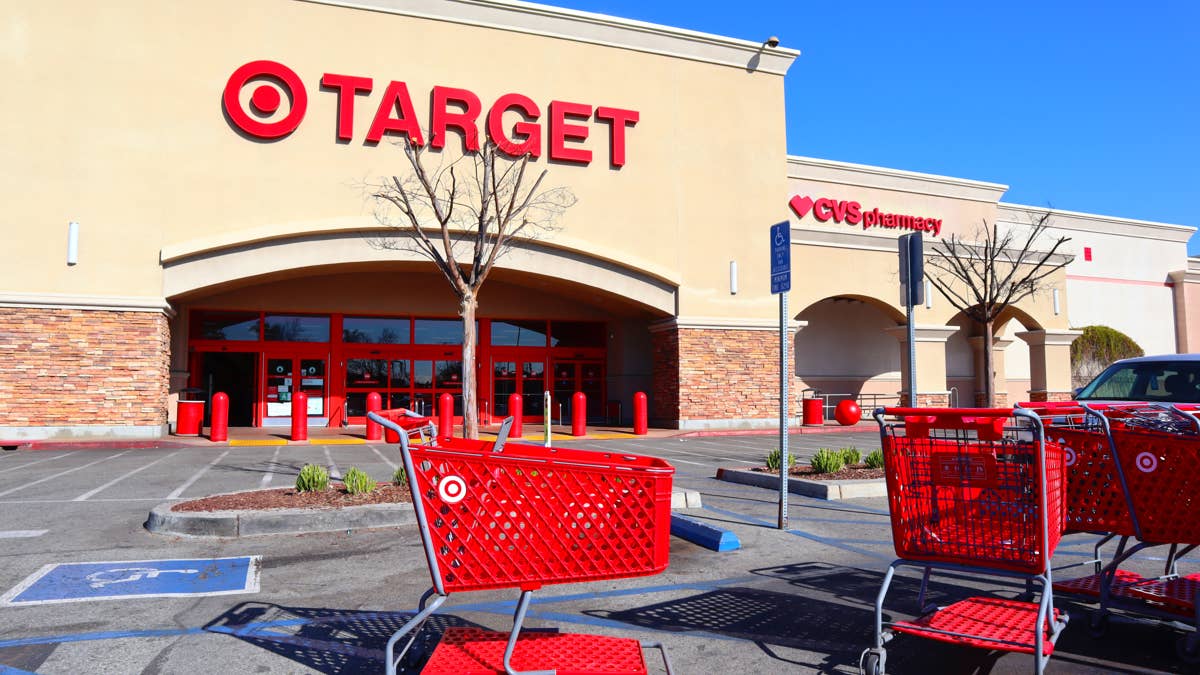
Early October has turned into a crowded fight for shoppers. Amazon held its Prime Big Deal Days on Oct. 7 and 8, and Target timed its own Circle Deal Days for the exact same two days. Walmart and Best Buy jumped in, too, each hoping to pull holiday budgets forward.
The surprise came from a chain most people had written off. Kohl’s has spent the year shrinking expectations, and it still expects full-year sales to decline between 3.5% and 4%. Yet when the deal week was over, it was Kohl’s, not the giants, that had posted the biggest jump in store visits.
Kohl’s posted the biggest traffic lift of the week
The numbers come from foot traffic tracker Placer.ai. On its sale days, Kohl’s visits ran 9.6% above its recent average for the same weekdays, the largest lift among the chains Placer tracked, while Target managed about 2%, Walmart about 1%, and Best Buy came in slightly below normal.
Against last year’s numbers, Kohl’s held its position. Visits were up 4.5%, with Target the only chain ahead at 6%. Walmart fell 0.9%, and Best Buy dropped 2.2%.
Target’s edge looks different once you factor in that it ran just two days this time, versus seven the prior fall. The Placer.ai figures measure foot traffic only, not what people spent once inside.
One day stood out above the rest. On Oct. 9, Kohl’s traffic jumped 22.3% above normal, due to it being the first day shoppers could redeem the Kohl’s Cash they had earned during the sale, Placer.ai reported. The reward program did exactly what it was built to do.
The promotion ran Oct. 5 through 8 and stacked rewards on top of markdowns. Shoppers earned $10 in Kohl’s Cash per $50 spent and got an extra 25% off at checkout.
Seasonal items were discounted by as much as half, and web orders went out free. After the sale ended, the Cash balance gave customers a concrete reason to come back.
A rare win for a chain still fighting to grow
This is not a company riding a hot streak. Kohl’s comparable sales slipped 0.9% in its second quarter, and CEO Michael Bender said customers are becoming “increasingly choiceful, actively seeking value in every purchase,” according to TheStreet. Its core low- and middle-income shoppers have been trading down to cheaper house brands.
Still, the traffic trend had been quietly improving before October. Placer.ai data showed Kohl’s store visits fell 1.4% in the second quarter, a far smaller drop than the 7.7% decline it suffered in the first quarter. The deal week suggests that recovery may be picking up speed.
The chain also heads into the holidays lighter than it was a year ago. It closed 27 stores in 15 states during 2025, and Bender has said the company has no plans to cut further. Among the roughly 1,150 stores still open, more than nine in 10 are making money. Each location that survived the cuts is pulling more of its own weight.
The backdrop remains tough, though. Bender has pointed to a “challenging macroeconomic environment,” with rising prices for everyday costs such as gas and food squeezing his shoppers. That is partly why Kohl’s leaned so heavily on discounts this month.
Why the retail giants looked flat
Target is the closest thing to a second winner here. CEO Michael Fiddelke took over in February 2026 after a rough 2025, when net sales fell 1.7%, and Target expects sales to grow in every quarter of 2026, according to Retail Dive.
Its traffic gain over last year hints that the turnaround is starting to show up in stores.
Walmart spread its event across a full week, from Oct. 5 through Oct. 11, which may have spread foot traffic too thin for a standout daily number. Hurricane Isaias also made landfall on the Gulf Coast on Oct. 9, and Placer.ai noted the storm may have kept shoppers away from Walmart and Best Buy that day.
More Retail:
- Target tackles a frustrating problem for shoppers
- America’s biggest RV seller closing more stores
- Costco helps members solve a key problem, but at a cost
Walmart’s customer mix has been shifting, too. CEO John Furner said the majority of its recent market share gains came from households earning more than $100,000, while those making under $50,000 are managing spending paycheck to paycheck, according to Retail Dive. Those stretched households may simply have had less to spend this month.
Best Buy was up against a tough comparison.
A year earlier, it posted 2.7% comparable sales growth in the quarter that included its 2025 sales push, with analysts on the earnings call calling it the best growth in more than four years, even as CFO Matt Bilunas said appliances were “probably the most difficult” category, according to Best Buy. Placer.ai said that a strong “Techtober” event left Best Buy with a high bar to clear this October.
What Kohl’s strong week signals for the holidays
The National Retail Federation (NRF) expects holiday sales to top $1 trillion for the first time, but much of that spending is coming from wealthier households.
“We definitely see it being a tale of two cities,” NRF Chief Economist Mark Mathews told the Boston Globe, noting that consumers with money are spending, while lower-income families are pulling back.
The typical Kohl’s shopper sits right in the middle, with a median household income above $95,000, according to Placer.ai. That puts the chain squarely in the group most likely to spend if the deals are right. The deal week showed that those shoppers will still show up for a sharp enough discount.
Foot traffic is not revenue, and one deal week will not close the gap on a difficult year. Kohl’s is still guiding for a meaningful full-year sales decline, and those visitors need to leave with full carts for October to show up in the bottom line.
What the data does show is that the discount-and-reward formula still works when shoppers are watching their spending closely.