
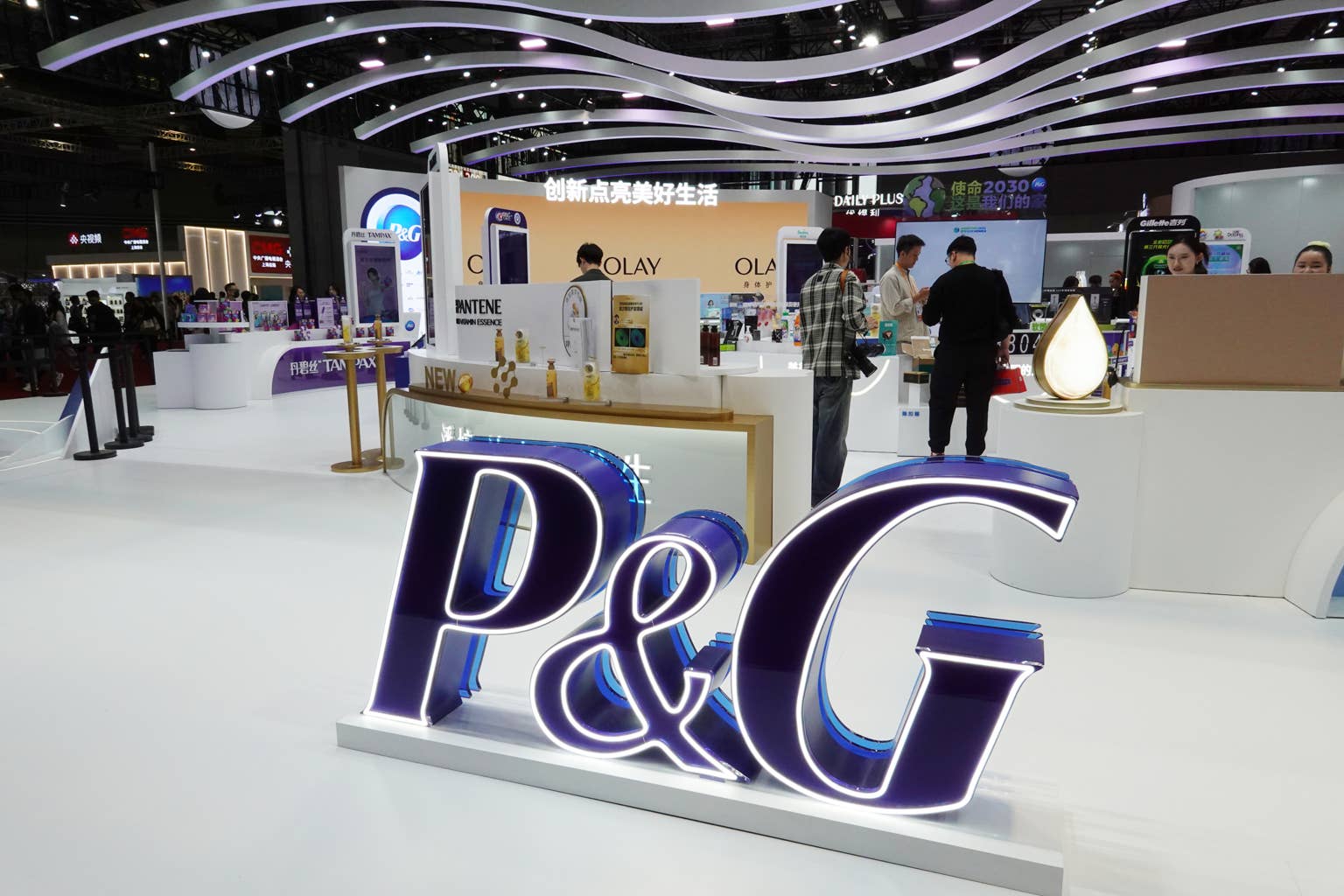
From Tide laundry detergent and Pampers diapers to Gillette razors, Dawn dish soap, and Charmin toilet paper, Procter & Gamble products are an integral part of millions of American households.
But behind some of the country’s most recognizable consumer brands, the company is preparing to operate with significantly fewer workers in parts of its global supply chain.
Procter & Gamble plans a 20% to 30% reduction in its product-supply workforce, including contractors, by 2030 as it expands automation and digital technology across its manufacturing and distribution operations.
The target was reaffirmed during the company’s Nov. 19 investor day, where executives detailed a strategy to generate up to $10 billion in productivity savings between 2027 and 2030.
The workforce reductions are part of a broader operational transformation as P&G continues to implement an earlier restructuring plan targeting as many as 7,000 non-manufacturing positions.
Together, the initiatives show how the consumer-products giant is seeking to improve efficiency while contending with rising expenses and changing consumer demand.
P&G plans major workforce reductions through automation
Chief Product Supply Officer Luc Reynaert detailed the company’s supply-chain transformation during the investor-day presentation.
Known as Supply 3.0, the strategy focuses on using automation, robotics, artificial intelligence, and connected supply-chain systems to improve manufacturing efficiency and reduce operating costs.
The company is targeting up to $1.8 billion in annual product-supply productivity savings by 2030.
More Layoffs:
- Canva CEO apologizes to workers, makes unusual promise amid layoffs
- Disney eyes thousands more layoffs as major cost-cutting push widens
- Popular website builder cuts 19% of jobs as CEO signals major shift
A major component involves reducing the number of employees and contractors needed to manufacture, package, and distribute its products.
P&G’s unattended-operations program is already operating at more than 15 sites, with further expansion planned for fiscal 2027.
The technology uses automated systems and robotics to reduce manual work while improving production efficiency, product quality, and reliability. P&G believes the initiative has the potential to deliver productivity improvements of up to 20% by 2030.
The company is also investing in automated distribution facilities. In Europe, its Intelligent Distribution Center program is expected to improve productivity by 35% and generate $100 million in savings over four to five years.
In addition, Reynaert highlighted the importance of retraining employees to operate increasingly automated facilities. The company’s global capability program is designed to help workers develop the digital and technical skills needed for its future supply chain.
However, P&G has not disclosed exactly how many employees and contractors will be affected by the planned workforce reduction.
P&G previously confirmed 7,000 job cuts
The latest workforce target comes as P&G continues a broader restructuring initiative announced in June 2025.
According to its 2026 annual report, the company plans to eliminate up to 7,000 non-manufacturing overhead positions by the end of fiscal 2027.
However, the restructuring extends beyond layoffs.
The annual report states that the plan includes exiting certain brands and markets, optimizing the supply chain and streamlining manufacturing processes.
The company also expects to incur costs associated with employee separations, facility exits, and other restructuring activities. According to its latest quarterly SEC filing, P&G expects approximately $2 billion in pretax restructuring costs over two years.
It recorded $1.2 billion in pretax restructuring charges during fiscal 2026 and another $192 million during the quarter ended Sept. 30, 2026.
P&G has already experienced a significant reduction in its overall employee count.
According to its 2025 and 2026 annual reports, the company employed approximately 104,000 people worldwide as of June 30, 2026, down from 109,000 a year earlier.
That represents a reduction of roughly 5,000 employees, and P&G reported a 4% workforce decline, attributed to its ongoing restructuring program.
P&G’s workforce reductions at a glance
Period
Workforce reduction
Details
June 2025 announcement
Up to 7,000 jobs
Non-manufacturing overhead positions to be eliminated by fiscal 2027
June 2025–June 2026
Approximately 5,000 fewer employees
Global headcount declined from 109,000 to 104,000 amid ongoing restructuring
November 2026 investor day
20%–30% reduction target
Product-supply workforce, including contractors, by 2030
The workforce reductions involve different employee groups and timelines. The previously announced 7,000 job cuts target non-manufacturing overhead positions, while the longer-term plan focuses on product-supply employees and contractors.
The New York Times reported, citing a P&G spokeswoman, that the product-supply reductions have already been underway for several years as part of the company’s Supply 3.0 program.
During the Nov. 19 investor-day Q&A, CEO Shailesh Jejurikar also acknowledged some overlap between the ongoing restructuring and the company’s broader technological transformation.
Meanwhile, the roughly 5,000-person decline in reported headcount reflects workforce changes that have already occurred, not a separate announcement of additional layoffs.
Manufacturing employees accounted for approximately 49% of its global workforce, while 28% of all employees were based in the United States.
The company has not identified how many U.S. workers will be affected by its longer-term product-supply reduction target.
The strategy reflects a broader shift toward generating more output through technology and productivity improvements rather than expanding staffing levels.
P&G seeks $10 billion in savings as costs continue rising
The workforce reductions come despite continued sales growth at the company behind brands including Bounty, Oral-B, Olay, and Head & Shoulders.
P&G reported first-quarter fiscal 2027 net sales of $23.3 billion, up 4% from $22.4 billion in the same quarter a year earlier.
However, diluted earnings per share increased just 1% to $1.97, compared with $1.95 a year earlier, as higher operating expenses offset some of the benefits from increased sales.
The company is also anticipating significant cost pressures.
In its October earnings release, P&G projected an approximately $1.4 billion after-tax commodity cost headwind for fiscal 2027, driven by higher raw-material, energy, and transportation expenses.
Those challenges help explain why the company is pursuing another major productivity initiative.
During its November investor day, P&G outlined a goal of generating up to $10 billion in cumulative productivity savings from fiscal 2027 through fiscal 2030.
The new target follows $2.8 billion in productivity savings delivered during fiscal 2026 and includes anticipated savings from the existing restructuring program.
The company expects the savings to help fund investments in its brands, innovation, and long-term growth.
Executives also discussed using artificial intelligence to streamline internal work processes, improve decision-making, and manage inventories and distribution more efficiently.
The strategy extends beyond manufacturing, reflecting a wider effort to reshape how one of the world’s largest consumer-products companies operates.
For workers in manufacturing and distribution, that transformation could mean fewer traditional positions and greater demand for employees with the technical skills needed to manage increasingly automated operations.